 kultura sjećanja / remembrance culture
PPSCO - Digital Exhibition
The study visit and photographic workshop
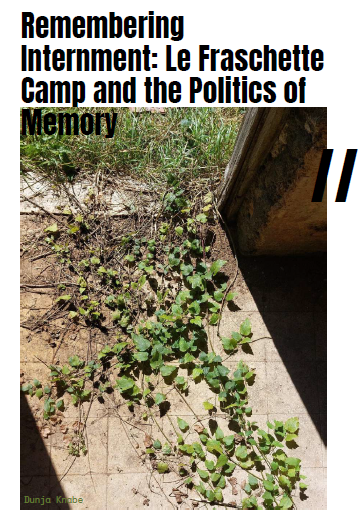
The photographs included in the online exhibition were taken by participants in the study visit and photographic workshop “Remembering Internment: Le Fraschette Camp and the Politics of Memory”, held from 17 to 20 September 2025 in Rome, Italy.
The study visit involved around 25 young people from across Europe and aimed to explore the history and memory of the Le Fraschette internment camp and its complex legacy as one of Italy’s largest Fascist-era camps, as well as its postwar role as a Displaced Persons Centre.
The participants were supported throughout the process by photographers and educators Sandra Vitaljić, Saša Kralj, and Thomas Porena.
The history of the camp
The Le Fraschette camp officially began operating in October 1942. The first deportees were Anglo-Maltese civilians from Libya, who were accused of being enemies of the Fascist state and spies for the British government. By the end of the same month, however, the first of many deportations of civilians from Croatia and Slovenia had already begun. They were transferred from other internment sites such as Gonars, Rab, and Molat, having been accused of supporting the resistance movement opposing Fascist rule in the occupied territories. Mostly women and elderly people, they faced severe hardship because of cold, hunger, and the general lack of basic necessities.
After the end of the war, the camp was rebuilt and used for the internment of “undesirable foreigners”: people who did not have the right to return to their countries, including war criminals, spies, saboteurs, and various collaborators of the Nazi and Fascist regimes. At the same time, Le Fraschette also became a refugee centre for Istrian and Dalmatian exiles, as well as for individuals from countries within the Soviet Union, who had been expelled for opposing the communist regime.
Finally, in an intersection with the final stage of colonialism, in the 1960s the camp was used as a “Refugee collection center” and hosted Italians fleeing from various African countries, including Tunisia, Libya and Egypt.
Today, the camp remains abandoned and largely absent from public memory and remembrance practices both in Italy and across Europe. For this reason, through the study visit and this publication, participants aimed to reconstruct and interpret this complex legacy, to critically reflect on memory and heritage through photography, and to contribute to greater visibility and recognition of the camp at both local and international levels.
Sources: The Boundaries of Umanity; Campo Le Fraschette |; I CAMPI FASCISTI - Dalle guerre in Africa alla Repubblica di Salò
The Exhibition
You can access the online exhibition at: