 kultura sjećanja / remembrance culture
Team meeting in Sarajevo
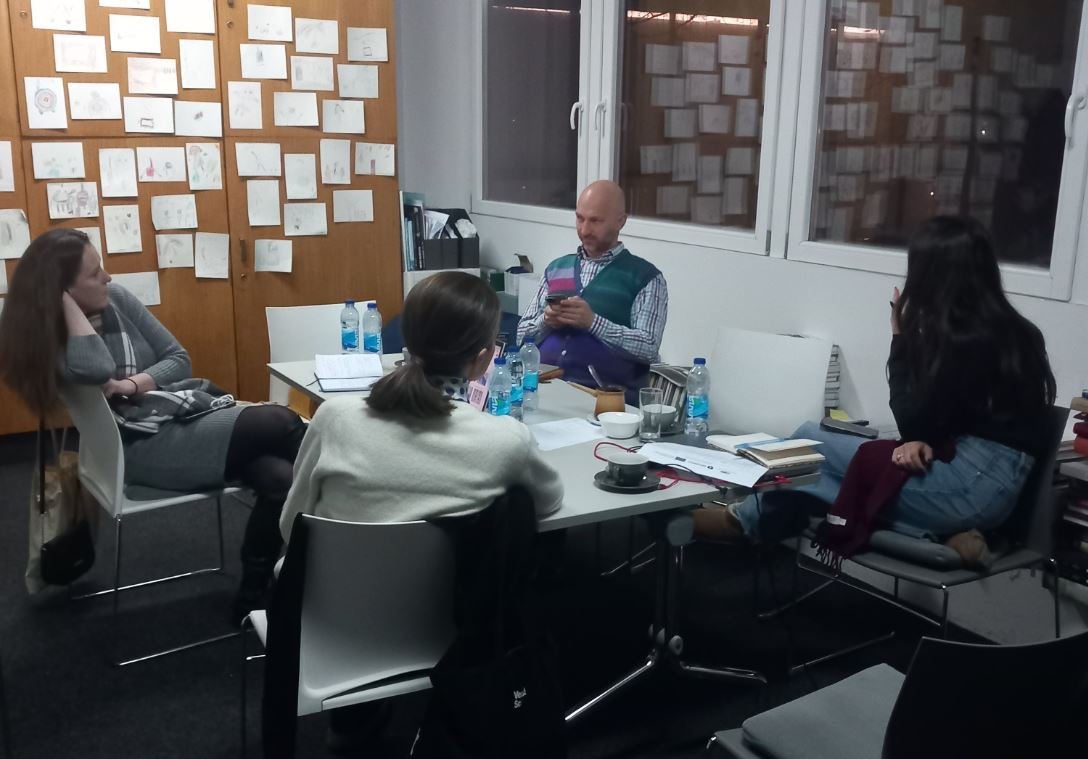
At the beginning of the second year of the project, the team met in Sarajevo to plan its work in 2026. Hosted by the Historical Museum of Bosnia and Herzegovina, the partners focused on planning the exhibition „Under occupation“ that will be opened in the Museum in May. Along with the exhibition, the team will organize a conversation with the artists in the format of a „living library“ where each artist is a „book“ that the Museum visitors can „borrow“ and discover the stories behind the art. After the exhibition opening the partners will organize a workshop using the „Dialogue for peace“ methodology of the project.
Among the main project activities for 2026 is also the second artistic residency in the scope of the project. This year the residency has a focus on community art. After publishing a cal for artists and evaluating all applications, the partners have selected artist Anita Karabašić for the residency program that will take place from the beginning of March to the end of May in Vienna, Austria.
Another topic of the meeting was the second edition of the study trip for students in Croatia and Bosnia and Herzegovina. The program for the study trip is already drafted and includes, among other, the following places of war trauma and resistance: Jasenovac, Pakrac, Bijelina, Srebrenica, Sarajevo, Dubrovnik. The team has planned the trip to take place from April 27 to May 3.
The meeting in Sarajevo (January 16-19) was an occasion for the project team to also evaluate its work in 2025, delegate tasks among the partners and explore the city and the Historical Museum in the context of cultural heritage destroyed by war.
The partner meeting was organized as part of the project "Response to Trauma and Destruction of Cultural Heritage" funded by the European Union from the Creative Europe program.
Funded by the European Union. The views and opinions expressed are those of the authors and do not necessarily reflect the views and opinions of the European Union or the European Executive Agency for Education and Culture (EACEA). Neither the European Union nor the EACEA can be held responsible for them.